
-
Call: +91 9028005102
-
Email: enquiry@medihse.in
HIRA vs JSA: One Finds the Risk, the Other Makes the Job Safer
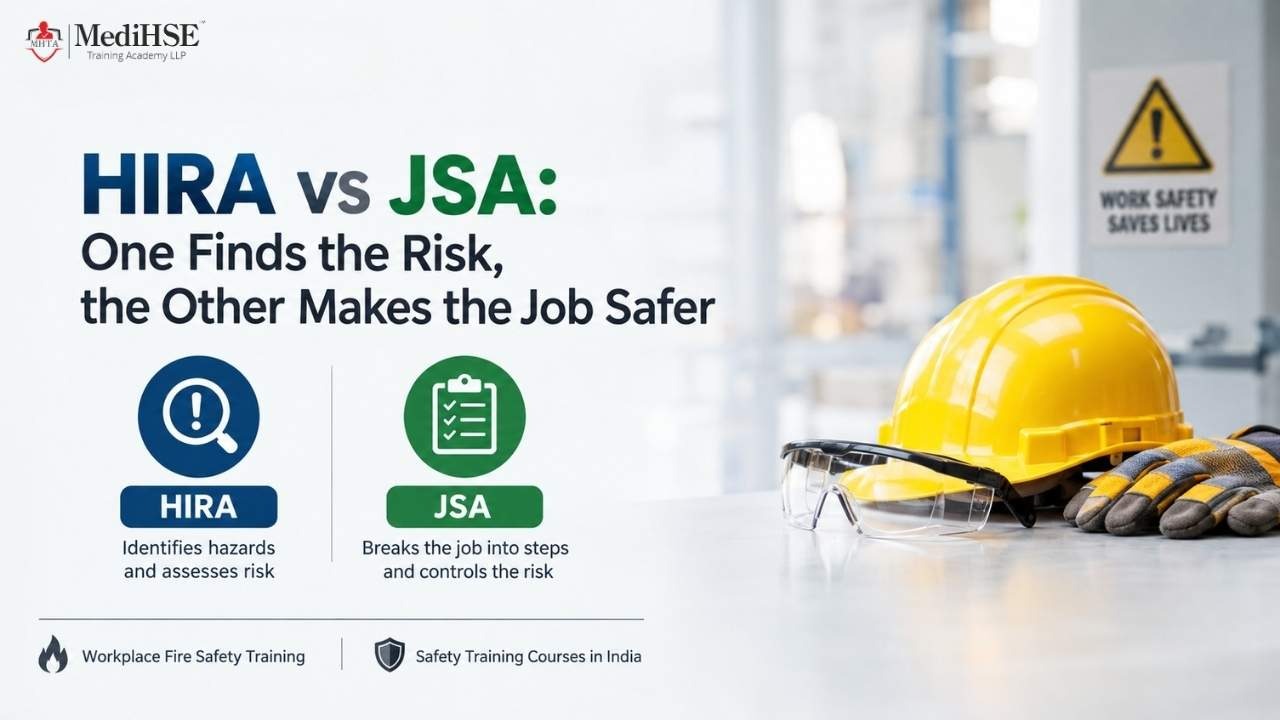
One overlooked hazard. One missed safety step. One preventable accident. In industrial environments, the difference between a safe shift and a serious incident can come down to how well risks are identified before work begins. That's where Hazard Identification and Risk Assessment (HIRA) and Job Safety Analysis (JSA) make a difference. For professionals pursuing workplace fire safety training and safety training courses in India, understanding these two tools is essential to building a proactive safety culture.
What Is HIRA? See the Bigger Picture
HIRA stands for Hazard Identification and Risk Assessment. It helps organisations identify hazards, evaluate the likelihood and severity of potential incidents, and establish suitable control measures.
Think of HIRA as the workplace's risk radar. It examines hazards across a facility, process or operation, including machinery, electrical systems, chemicals, fire risks and emergency situations.
For example, a factory may use HIRA to assess the risks of an electrical short circuit, identify potential fire escalation, and evaluate whether its existing alarms, emergency exits and firefighting arrangements provide adequate protection.
What Is JSA? Zoom In on the Job
Job Safety Analysis focuses on a specific task. It breaks the job into steps, identifies the hazards associated with each step, and determines how those risks can be controlled.
Imagine a technician repairing electrical equipment. A JSA could identify the risk of electric shock during isolation, burns from residual heat, or unexpected energisation during maintenance.
The resulting precautions might include isolating the power supply, applying lockout/tagout procedures, verifying the absence of voltage, and using appropriate protective equipment.
WhatHIRA vs JSA: The Difference That Matters
Here's an easy way to remember the distinction:
HIRA asks: What could go wrong across this workplace or process?
JSA asks: What could go wrong at each step of this particular job?
HIRA provides a broader view of workplace risks, while JSA translates hazard awareness into task-specific precautions. Neither replaces the other; they work best together.
The Wow Factor: How One Hazard Needs Two Safety Tools
Consider a factory where workers use equipment near combustible materials.
Step 1 — HIRA identifies the bigger threat: The assessment highlights electrical faults, combustible materials and the possibility of fire spreading through the facility. The organisation reviews preventive controls, fire detection, emergency access and evacuation arrangements.
Step 2 — JSA tackles the task: Before a maintenance activity begins, the team breaks the job into steps and identifies ignition sources, electrical exposure and unsafe work practices. Appropriate isolation, permits and task-specific precautions are established.
Step 3 — Controls become action: Workers understand not only the hazards present but also what they must do to prevent an incident.
This is how HIRA and JSA complement each other: HIRA identifies where the danger lies; JSA helps determine how to perform the job safely.
Why These Tools Matter for Workplace Safety
Effective risk management requires more than paperwork. It requires workers who can recognise hazards, supervisors who implement controls and organisations that review risks whenever conditions change.
Practical workplace fire safety training helps employees understand fire hazards, prevention and emergency response. Meanwhile, comprehensive safety training courses in India can strengthen knowledge of risk assessment, task planning and hazard control.
For MediHSE, the goal is clear: turn safety knowledge into safer workplace decisions. When HIRA and JSA become part of everyday work, organisations are better equipped to identify risks early, prevent incidents and protect their workforce.